
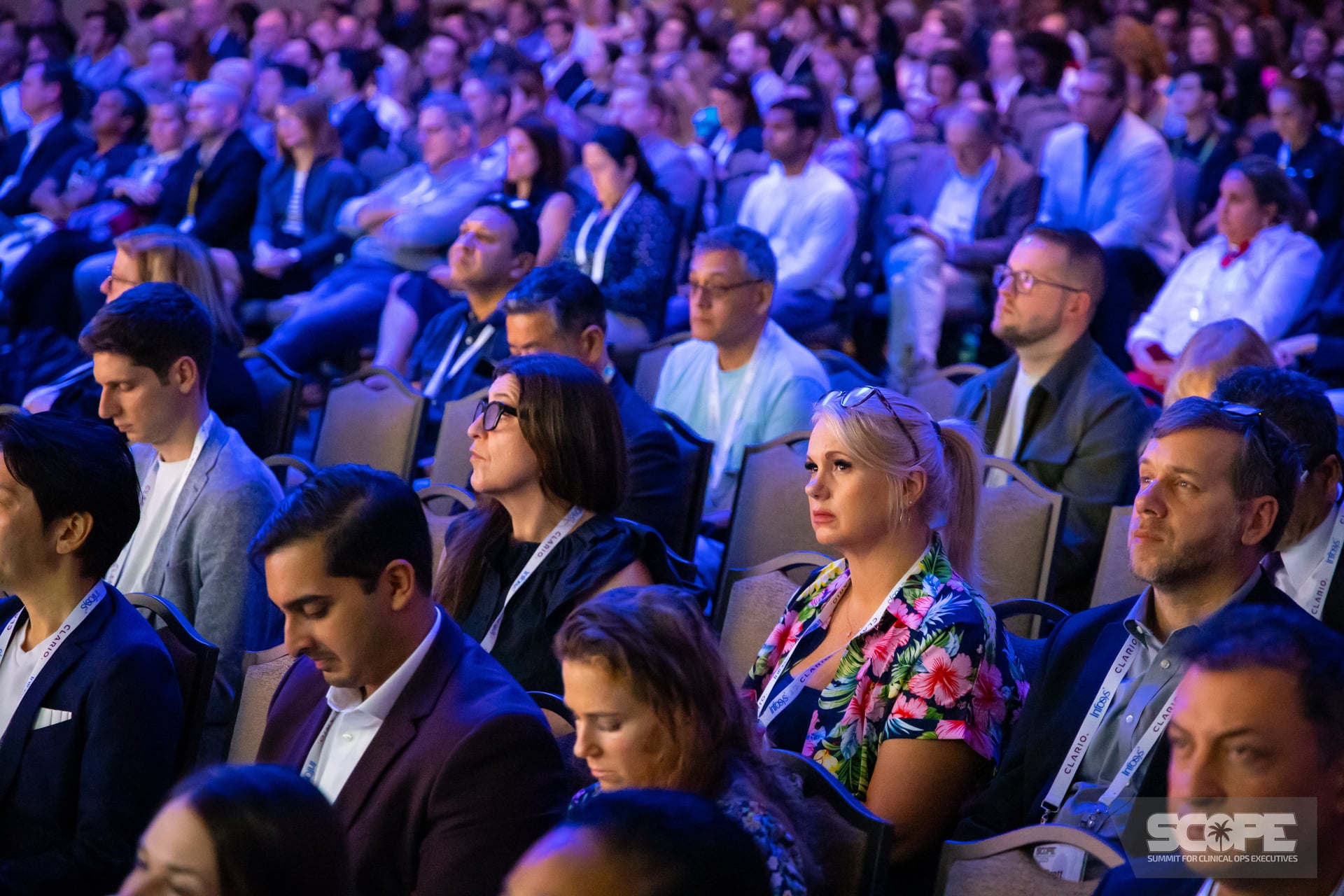
Now in its 17th year, SCOPE returned February 2-5, 2026, in Orlando, FL, bringing together the full clinical research ecosystem for four high-impact days of discussion, strategy, and networking.
The 2026 program expands coverage of in-demand topics like Development Planning, Protocol Optimization, Patient-Centric Trial Design, Site Engagement & Recruitment, Generative AI, Small Biopharma Strategies, Supply and ClinTech Investment, all focused on advancing solutions in trial planning, operations, innovation, and investment.
Professor Johanna Blom, FACILITATE project’s coordinator, took part in the symposium on Human Trial Navigation, Data Reciprocity, and the Future of Trial Access focused on how to widen the clinical trial “funnel” and reduce early drop-off.
A central theme was that trust and inclusion are not achieved through communication alone, they are built into systems through design. Blom highlighted FACILITATE’s Return of Individual Participant Data (RoIPD) by Design framework as a practical example of how reciprocity can be embedded from the outset. “By ensuring that participants’ contributions are acknowledged and, where appropriate, individual data are returned in a structured and responsible way, RoIPD strengthens trust, supports transparency, and ultimately improves trial feasibility and access” she stated.
The session Beyond the Screen Fail explored why many patients who engage with research never reach enrolment and what this means for equity and sustainability. Panelists emphasized that screening is not just a technical filter, but a meaningful interaction that shapes future willingness to participate. The FACILITATE RoIPD framework was presented as part of the solution: by promoting reciprocity and continuity “by design,” even at early decision points, research systems can avoid silent drop-off and preserve relationships with participants. “Treating screen failure as a design challenge – rather than an inevitable outcome – opens the door to more inclusive and resilient research ecosystems” remarked Blom.
At the workshop Inclusion by Design in Trial Navigation stakeholders worked together to identify where exclusion is unintentionally built into trial navigation pathways and how those gaps can be addressed proactively. Discussions reinforced that inclusion is not only about who is enrolled, but also about how people are treated when they engage with research. FACILITATE’s RoIPD framework was cited as a concrete example of how reciprocity, transparency, and accountability can be operationalized across sponsors and settings. By embedding these principles into navigation systems from the start, research can become more trustworthy, equitable, and sustainable, benefiting participants and the broader ecosystem alike.